


How Did Open Energy Market Accelerate Its Software Roadmap With an Offshore Development Team in India?
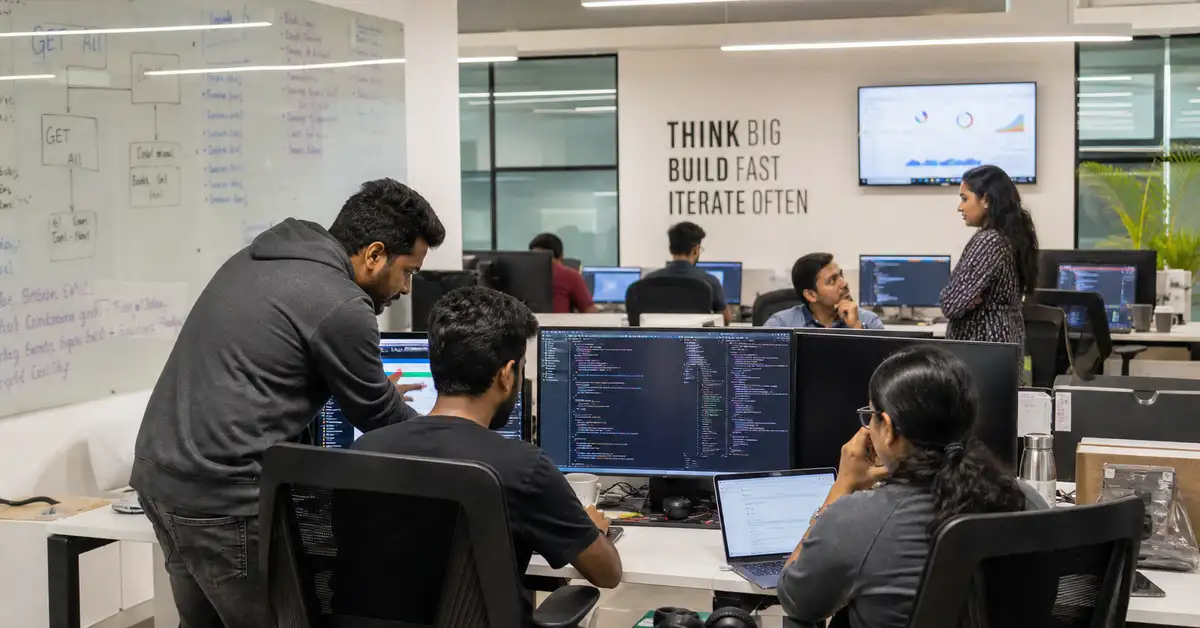
Open Energy Market (OEM), a UK energy management and sustainability software business, needed to make significant upfront investments in technology and sales before earning revenue. With limited working capital and an ambitious software development roadmap, it worked with us to build the core of its technology team in Bengaluru (Bangalore), India. The result was a step change in delivery speed that fast-tracked OEM's revenue growth, with its offshore engineers working as integral members of the business rather than arm's-length contractors.
Key Takeaway
Open Energy Market accelerated its software development roadmap by building a dedicated Bengaluru software team with us. In our experience, salaries in Bengaluru often run 40 to 70% below the UK, especially for mid-to-senior roles, which let OEM build a larger team than its budget would have bought in the UK. It fast-tracked product development and revenue growth for the energy software business.
This case study examines how OEM solved a challenge that many early-stage energy SaaS companies face: the need to build complex technology before revenue catches up with ambition. CEO Chris Maclean's approach, guided by our consultancy and sector expertise, offers a replicable model for UK energy technology companies facing similar constraints as the global energy management systems market grows towards USD 84 billion by 2029.
40 to 70%
Lower Salaries
Bengaluru vs UK, mid-to-senior roles, in our experience
4 to 6 Weeks
Typical Hiring Time
Bengaluru, search to offer accepted
$49B
Energy Management Systems
Global market value in 2025
5.8M
Tech Industry Workforce
India, nasscom FY2025 estimate
Sources: MarketsandMarkets (Energy Management Systems Market, 2025); nasscom Strategic Review 2025
What Challenge Was Open Energy Market Facing?
Open Energy Market is a UK software business in energy management and sustainability, helping organisations manage energy risk and make long-term, sustainable procurement decisions. The business model required building sophisticated software, and the sales capability to sell it, before it could generate meaningful revenue from clients.
This created a classic startup economics problem. OEM needed to make significant upfront investments in technology and sales staff before the revenue arrived, in an industry with a long working capital cycle. Funds were limited, and every hiring decision had to stretch them as far as possible.
A full software development team in the UK is hard to fund at that stage. A senior software engineer in London earns around £81,000 in average base salary according to Glassdoor, before employer National Insurance, pension and overheads. Four senior developers cost well over £300,000 a year in salary alone, a sum that would consume a disproportionate share of an early-stage company's capital and leave little room for iteration, scaling or the pivots that early-stage SaaS companies need to make.
Cheaper engineers were only part of the answer. OEM wanted an offshore team that was an extension of the organisation, with its people treated as members of the team rather than resources, and able to understand commercial energy procurement, the regulatory complexity of UK energy markets and the requirements of enterprise clients. It did not want traditional outsourcing, where code is delivered to a specification without deeper understanding of the business.
Why Did OEM Choose Us as Its Offshoring Partner?
Energy is a hard sector for generic offshoring providers. Energy procurement involves complex regulatory frameworks, volatile commodity markets and enterprise clients with demanding compliance requirements. OEM needed a partner that understood these dynamics from direct experience.
Our founding team brought precisely that experience. Our founders scaled EnergyQuote JHA to more than 300 people, about 60% of them offshore, before its acquisition by Accenture in 2015. That is operational experience, built over years of managing offshore teams delivering energy consultancy services at scale.
That shared background in energy consultancy was a critical differentiator in the partnership. Beyond recruiting and managing offshore teams, we understood how technology teams in the energy sector need to operate: the data sensitivity requirements, the regulatory awareness and the domain knowledge that separates effective energy SaaS development from generic software outsourcing.
"Potentiam worked very closely with OEM to understand our needs, our goals, how we were going to expand, and what our strategy was, and then gave us the consultancy, the advice for us to go out and hire those team members under the guidance and recommendation of Potentiam."
Chris Maclean, CEO, Open Energy Market
Chris's description highlights an important distinction in how we work. We start with strategic consultancy: understanding a client's expansion plans, assessing what roles and capabilities are needed, and then guiding the hiring with recommendations grounded in real energy sector experience. That consultative approach is what separates a strategic offshoring partner from a recruitment agency or a BPO.
Why Was Bengaluru the Right Location for OEM's Offshore Engineering Team?

Bengaluru is the centre of India's technology economy, and for an energy SaaS company like OEM, the city offered the combination of depth, specialisation and cost efficiency it needed. It is the largest engineering pool we recruit from, and the one that goes furthest up the seniority curve, with an ecosystem built around global technology companies, product firms and engineering centres.
For OEM's needs, Bengaluru's advantages were particularly compelling. Energy software needs backend engineering, data analytics capability for energy market data, and frontend development for enterprise users. India's technology industry workforce of 5.8 million people, as estimated by nasscom for FY2025, provides the scale of talent pipeline needed to find specialists in these areas.
The cost economics were equally important for a startup managing limited working capital. In our experience, salaries in Bengaluru often run 40 to 70% below the UK, especially for mid-to-senior roles. For OEM that meant a larger, more capable development team than the same money would have bought in the UK.
India's broader offshoring ecosystem also provided infrastructure advantages. According to nasscom, India hosted more than 1,750 global capability centres in 2024. That mature ecosystem means Bengaluru's support infrastructure, including office space, connectivity, legal frameworks for international employment and professional development pathways, is well established rather than experimental.
How Do UK and India Software Development Costs Compare for Energy SaaS Companies?
The financial case for building an offshore development team in India is driven by significant cost differentials across software engineering roles. For energy SaaS companies like OEM, where development budgets compete directly with other startup priorities such as sales, marketing, and regulatory compliance, these savings can determine whether an ambitious product roadmap is feasible or not.
| Factor | United Kingdom | Bengaluru, India |
|---|---|---|
| Senior Engineer (Average Base Salary) | ~£81,000 (London) | Often 40 to 70% lower for mid-to-senior roles |
| Working Day, in UK Time | Standard UK day | 4.5 hours ahead in British Summer Time, 5.5 in winter: a 9 to 6 day runs 4.30am to 1.30pm UK time in summer and 3.30am to 12.30pm in winter, so the overlap is your morning |
| Talent Pool Scale | Deep but highly competitive | Deep; India-wide tech workforce of 5.8M (nasscom, FY2025 estimate) |
Sources: Glassdoor London salary data (September 2026); nasscom Strategic Review 2025. Bengaluru salary range from our own work with clients.
For OEM, getting a larger team for its budget is what let the roadmap move at the pace the business needed. The global offshore software development market exists precisely because these economics enable companies to achieve more with their available capital than domestic-only hiring models allow.
How Did We Build OEM's Offshore Team Structure?
Our work with OEM followed a structured method that put understanding the business before placing a single team member. It reflects how we operate: offshore teams succeed when they are built around a company's strategy rather than fitted into a generic staffing template.
Strategic Assessment and Goal Mapping
We worked closely with OEM to understand its needs, its goals, how it planned to expand and its strategy, and the technology capabilities its product roadmap needed. Only then did we advise on the team and the hiring, starting from where OEM was heading and what structure would get it there within its capital constraints.
Location and Function Mapping
Based on OEM's needs, we identified Bengaluru as the right location for its technology hub, where the depth of engineering talent and the cost base would accelerate the product roadmap.
Guided Recruitment and Team Assembly
We provided guidance and recommendations throughout the hiring process, helping OEM find candidates with the right skills and experience and the capacity to integrate into a UK-headquartered energy technology company. The emphasis was on team members who could understand OEM's domain as well as write code to a specification.
Integration and Ongoing Support
Rather than handing off once people were placed, we provided ongoing recruitment, HR and operational support to keep the team stable, developing and scalable. The Bengaluru team was fully integrated into OEM's wider technology function as a genuine extension of the company.
What Results Did Open Energy Market Achieve With Its Offshore Teams?

The partnership delivered results across several dimensions. The impact went beyond cost savings to change the pace and scope of what the company could achieve.
Accelerated software development roadmap: The Bengaluru team, embedded in OEM's technology function, accelerated development cycles and time to market within OEM's budget, helping it deliver enhanced services to clients sooner.
Faster revenue growth: Faster development and efficient use of capital fast-tracked OEM's revenue growth. Delivery scaled without a matching rise in onshore headcount, which freed internal resources for higher-value work.
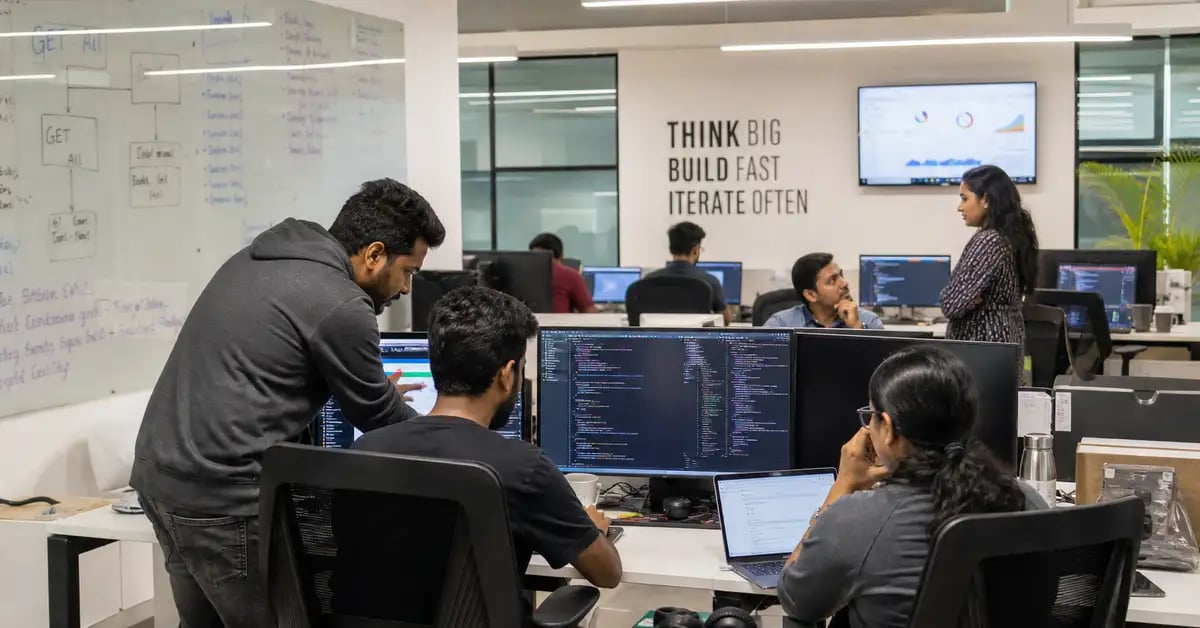
Seamless team integration: Perhaps the most significant outcome was the quality of integration between OEM's UK leadership and its offshore team. OEM had wanted its offshore developers treated as members of the team rather than resources, and the Bengaluru team became integral members of the organisation. That is a meaningful distinction from the typical outsourcing relationship, where offshore teams operate at a distance from the company's culture, strategy and day-to-day decisions.
Efficient use of startup capital: For a company that needed to invest in technology before it could generate revenue, the offshore model changed OEM's financial equation. OEM got a larger engineering team for its budget, reducing its cost to serve while keeping the quality of its technical output high.
You can read the full Open Energy Market case study or watch their team describe it.
Why Is Offshore Development Critical for UK Energy SaaS Companies in 2026?
OEM's experience reflects a broader structural shift in the UK energy technology sector. The demand for sophisticated energy management software is growing rapidly, driven by regulatory change, market volatility, and enterprise demand for data-driven procurement tools. Companies that cannot accelerate their development timelines risk losing ground in a market that rewards speed and capability.
MarketsandMarkets values the global energy management systems market, spanning software, hardware and services, at USD 49.01 billion in 2025 and projects it to reach USD 84.34 billion by 2029, growth of more than 70% in four years. Software and cloud-based services are central to that growth, underlining the role of technology in the energy transition.
For UK energy technology companies, the challenge is that building competitive software requires engineering talent at scale, and the UK tech sector faces persistent salary inflation and talent competition from better-funded competitors in fintech, healthtech, and AI. AI-driven automation promises substantial savings for the energy sector, but capturing that value requires the software engineering capacity to build and deploy these systems.
The economics of energy SaaS offshoring are increasingly compelling. As energy firms and utilities push ahead with digitalisation programmes, the demand for energy-domain software engineers will only intensify. Companies like OEM that have already established offshore engineering teams in India have capacity in place as that demand grows.
Potentiam builds embedded offshore teams for energy and technology companies across five hubs in India, South Africa, Romania and Brazil.
Explore Energy Consulting SolutionsWhat Can Other Energy Technology Companies Learn from OEM's Approach?
OEM's partnership with us offers several principles that are directly transferable to other UK energy technology companies considering offshore development teams.
Choose a partner with sector expertise: Generic offshoring providers often lack the domain understanding needed to recruit effectively for energy technology roles. Our founders built and scaled an energy consultancy to more than 300 people, about 60% of them offshore, before its acquisition by Accenture. That operational heritage means we understand how energy companies work, what technical skills matter in the sector and how to integrate offshore teams into energy-specific workflows.
Invest in integration as well as cost savings: The difference between OEM's experience and a typical outsourcing arrangement was the level of integration achieved. Offshore team members became integral members of OEM's technology function, embedded in its work rather than kept at arm's length. That level of embedding takes deliberate effort in onboarding, communication and cultural alignment, which is the support our embedded HRBP model provides.
Match locations to functions: OEM's decision to build the core of its technology team in Bengaluru, where the engineering depth is, reflects a principle of geographic specialisation. Energy SaaS companies should evaluate their function mix and choose locations accordingly, rather than defaulting to a single offshore destination for every role. For the detail, read how we choose the best offshore location for a technology team.
Start before you think you are ready: OEM was an early-stage company with limited capital when it began its offshore journey, and it did not wait until it was larger or better funded. Building early let it accelerate development within its budget. For energy technology start-ups facing similar constraints, OEM's experience suggests that an offshore engineering team built early can accelerate growth.
With the energy management systems market forecast to grow by more than 70% between 2025 and 2029, companies that secure engineering capacity now, whether through offshore teams in Bengaluru or multi-hub models spanning India and South Africa, will be well placed to capture their share of this expanding market.
Frequently Asked Questions
What is energy SaaS offshoring and how does it benefit UK startups?
Energy SaaS offshoring involves building dedicated software development and operations teams in locations like Bengaluru, India and Cape Town, South Africa to support UK-headquartered energy technology companies. For startups like OEM, the primary benefit is the ability to build a larger, more capable engineering team within a constrained budget. Rather than outsourcing individual projects to third-party vendors, companies build embedded teams that function as genuine extensions of their organisation, understanding the business domain and contributing to product strategy alongside UK leadership.
How much does an offshore development team in India cost compared to a UK team?
In our experience, salaries in Bengaluru often run 40 to 70% below the UK, especially for mid-to-senior roles. For comparison, a senior software engineer in London earns around £81,000 in average base salary according to Glassdoor, before employer National Insurance, pension and overheads. For Open Energy Market, building in Bengaluru meant a larger team for the same budget. The saving lets energy SaaS companies invest more in product development, hire additional specialists or fund other growth priorities.
Why is Bengaluru the preferred location for offshore software development teams?
Bengaluru is the largest engineering pool we recruit from, and the one that goes furthest up the seniority curve, with deep software engineering, data and AI talent. India hosts more than 1,750 global capability centres according to nasscom (2024), a mature ecosystem with established infrastructure for international technology teams, and its technology workforce of 5.8 million people (nasscom's FY2025 estimate) provides a deep and continuously replenished talent pipeline. For energy SaaS companies specifically, Bengaluru offers engineers experienced in building data-intensive products, real-time analytics systems and cloud-based applications.
How does time zone difference affect collaboration between UK and Bengaluru teams?
Bengaluru is 4.5 hours ahead of the UK in British Summer Time and 5.5 hours ahead in winter. A 9 to 6 day there runs from 4.30am to 1.30pm UK time in summer and 3.30am to 12.30pm in winter, so the live overlap falls in your morning and their day finishes around your lunchtime. The team has already worked several hours by the time you arrive, and work you hand over at the end of your day is picked up at the start of theirs. With structured handoffs, clear documentation and agreed hours where the work needs them, the offset becomes a productivity advantage.
What is the difference between offshoring and outsourcing for energy technology companies?
Outsourcing typically involves contracting work to a third-party vendor who delivers outputs to a specification. The vendor's team works for the vendor rather than the client company, and the relationship is kept at arm's length. Offshoring with us takes a different approach: building dedicated teams that work exclusively for the client company and operate as embedded extensions of the organisation. OEM's Bengaluru developers work as integral members of OEM's own technology function. That distinction matters for the quality of output and the long-term value of the team.
How long does it take to build an offshore software development team in Bengaluru?
We typically hire in Bengaluru in four to six weeks, from starting the search to the candidate accepting the offer, and we see the UK equivalent take six to twelve weeks or longer. A candidate's notice period can push the start date later. The strategic assessment and role definition run in parallel with candidate sourcing. Software development teams then need a ramp-up period of several weeks as engineers learn the codebase, architecture and domain. Our structured onboarding, combined with embedded HRBP support, speeds up that integration compared with building an offshore team without local management infrastructure.
Ready to Build Your Offshore Engineering Team?
Whether you need software development capacity in Bengaluru, operations support in Cape Town, or a multi-hub model combining both, Potentiam builds embedded offshore teams for energy technology and SaaS companies. Our founders scaled EnergyQuote JHA to more than 300 people, about 60% of them offshore, before its acquisition by Accenture, and that operational experience powers every engagement.
Potentiam
Strategic Offshoring Consultancy, Potentiam
Potentiam is a London-based strategic offshoring consultancy that helps mid-sized companies scale by building high-performing, embedded offshore teams across five hubs in South Africa, Romania, India and Brazil. Founded by operators who scaled EnergyQuote JHA to more than 300 people, about 60% of them offshore, before its acquisition by Accenture in 2015. We build dedicated teams with embedded HR business partner support for long-term operational success, working as a consultancy rather than a BPO or a recruitment agency.
Sources: MarketsandMarkets, Energy Management Systems Market report; nasscom Strategic Review 2025 press release; Glassdoor London salary data (September 2026)



.jpg?length=750&name=solar-panel-facility-coworkers-doing-brainstorming-reviewing-performance%20(1).jpg)